
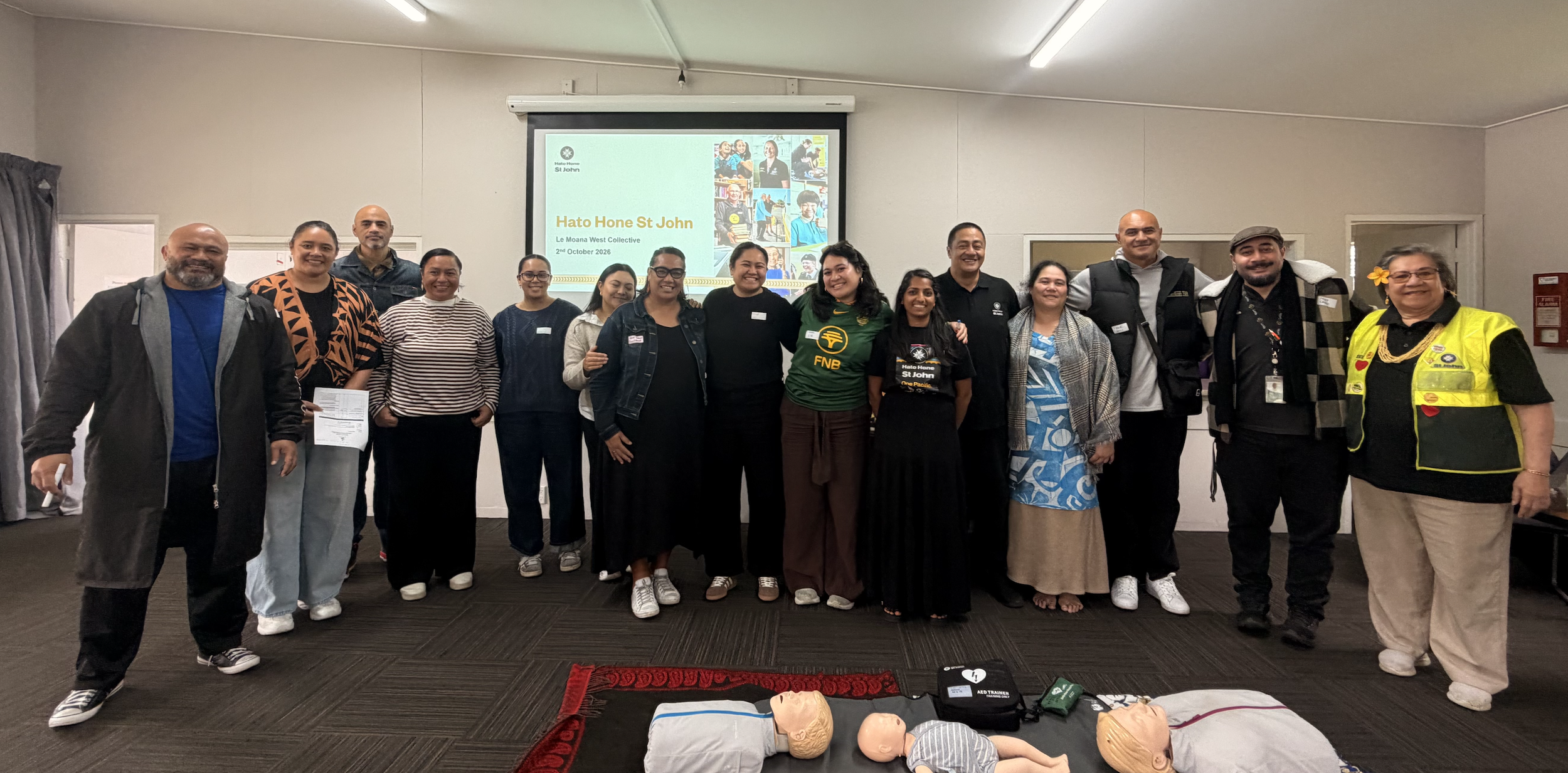
Sometimes, looking after our communities means being prepared for the moments we hope will never happen.
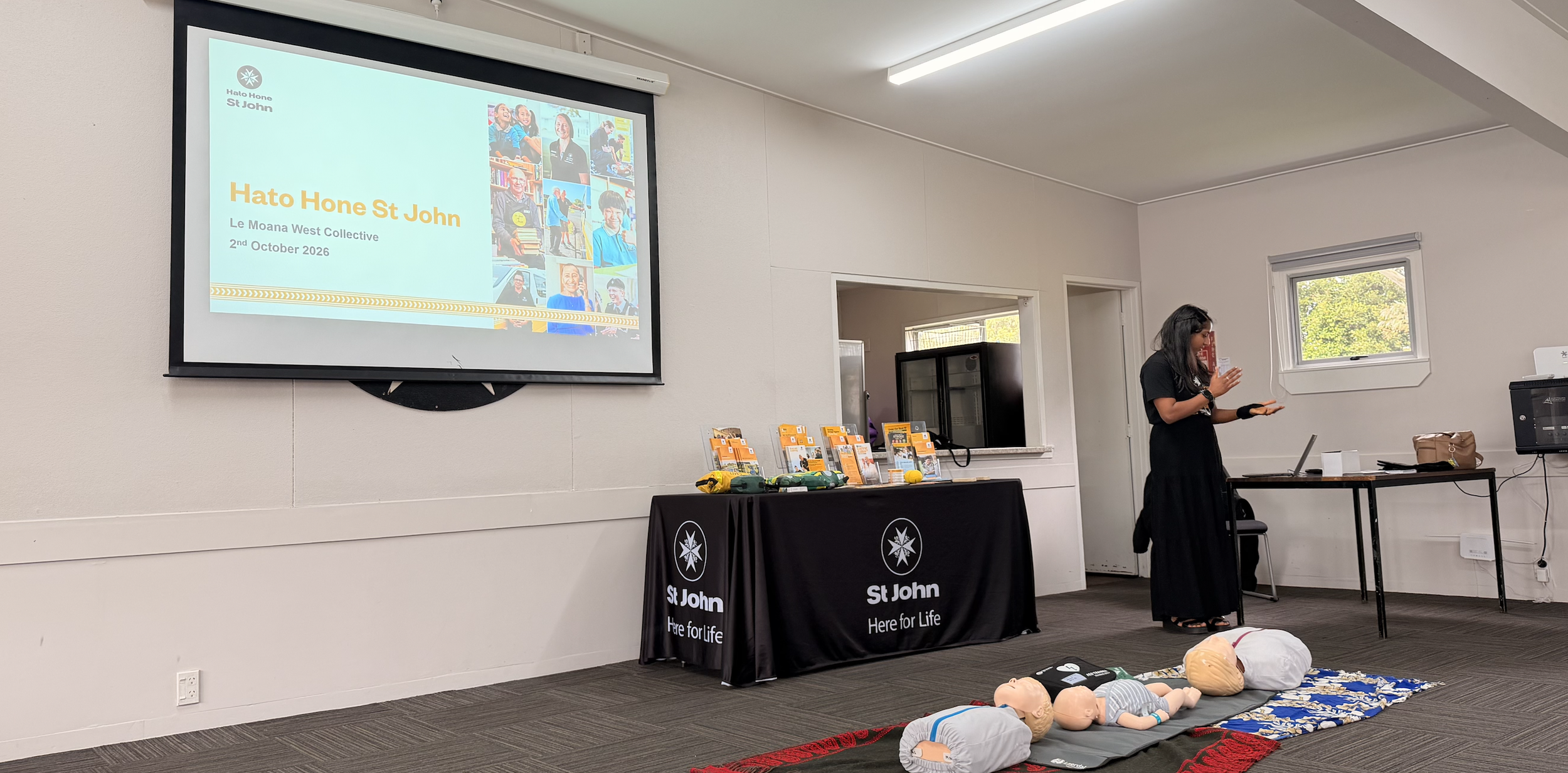
Recently, members of Le Moana West Collective came together for a 3 Steps for Life training session with Hato Hone St John, learning the practical skills and confidence needed to respond when someone experiences a cardiac arrest.
The session was facilitated by Eleni Mason, a Le Moana West Collective member who also works as the Community Engagement Manager at Hato Hone St John. Through this connection, our Collective had the opportunity to learn lifesaving skills together, with a shared intention to take that knowledge back into our own communities.
Because when it comes to saving lives, what one person learns has the potential to protect many more.
Every year, thousands of New Zealanders experience a cardiac arrest outside of hospital, with many incidents happening at home, surrounded by the people closest to them.
In Aotearoa, approximately one in ten people survive an out-of-hospital cardiac arrest. For Pacific communities, the picture is even more concerning, with Pasifika people facing a reported 20% lower chance of survival.
These statistics remind us why accessible, community-based training matters. In an emergency, the first person able to help is often not a medical professional, but a family member, friend, neighbour or someone nearby.
Through Hato Hone St John's free one-hour 3 Steps for Life programme, our members learned three simple but critical actions:
Call 111 — Get emergency help on the way as quickly as possible.
Start CPR — Help keep blood circulating while waiting for emergency services.
Use an AED — An automated external defibrillator can help restore a normal heart rhythm.
With every minute that passes without intervention, a person's chance of survival decreases. Knowing what to do, and having the confidence to act, can make a lifesaving difference.
But beyond the practical training, the session also opened up an important conversation about how we make this knowledge more accessible across our Pacific communities.
When one person learns, a community benefits
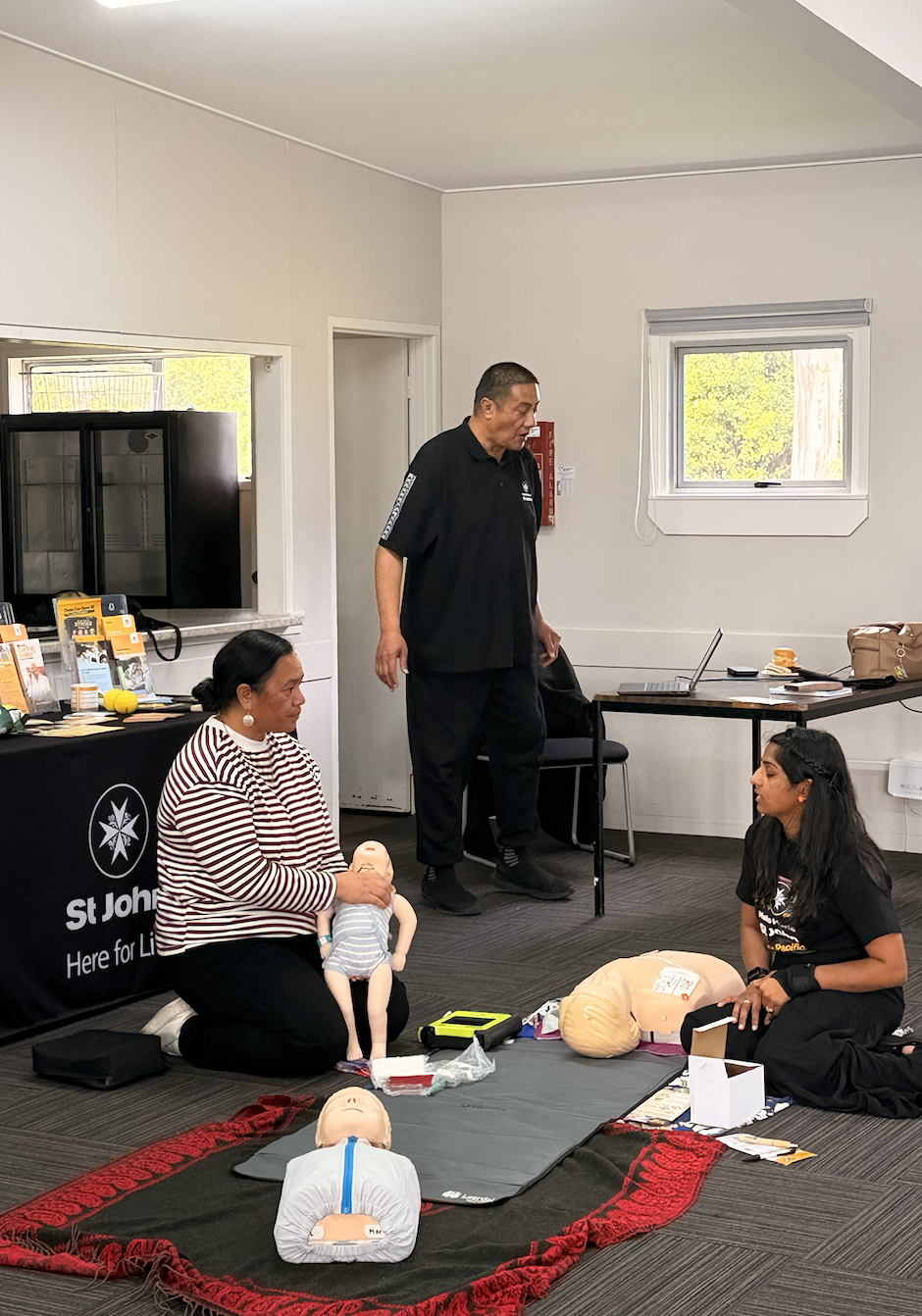
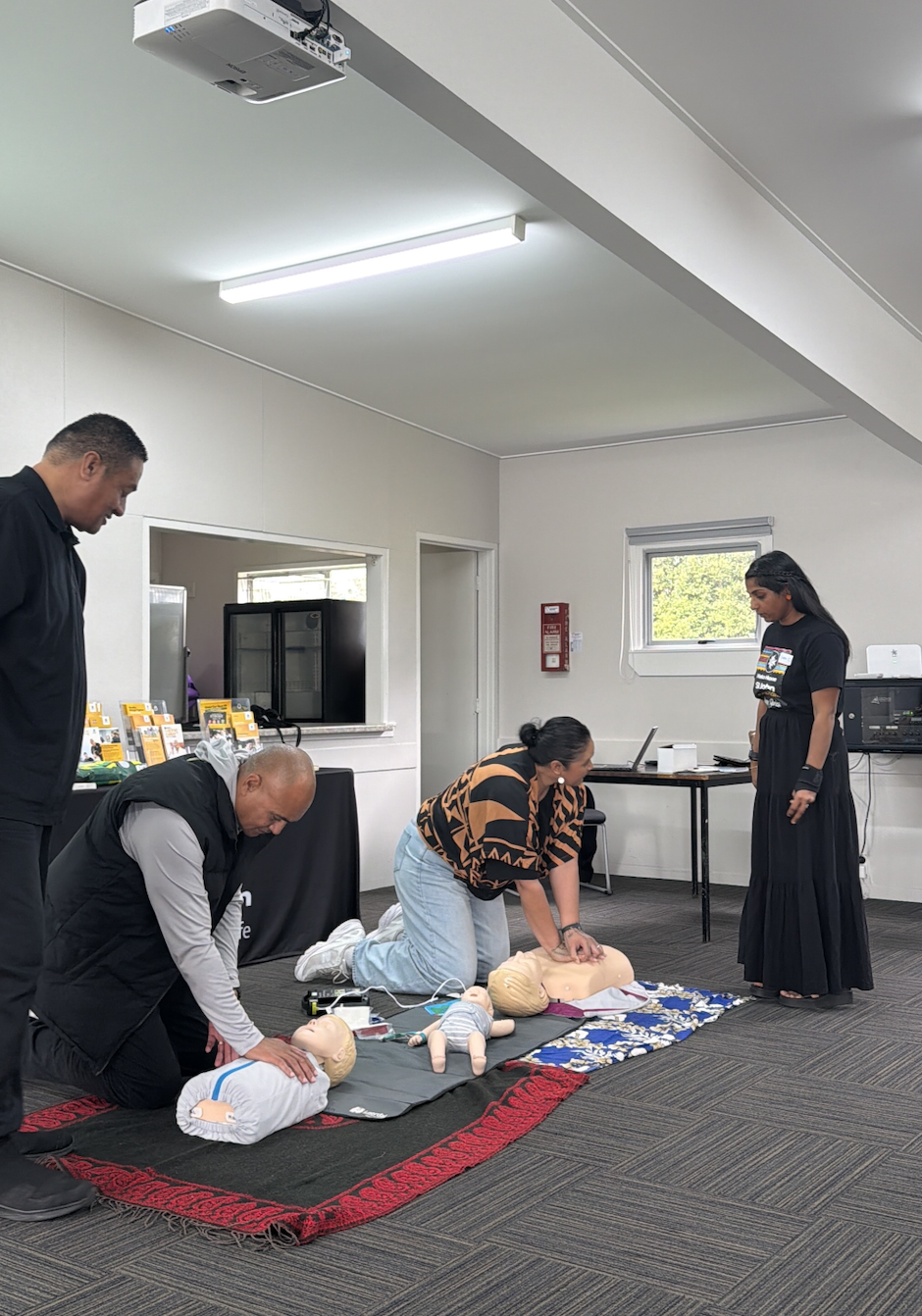
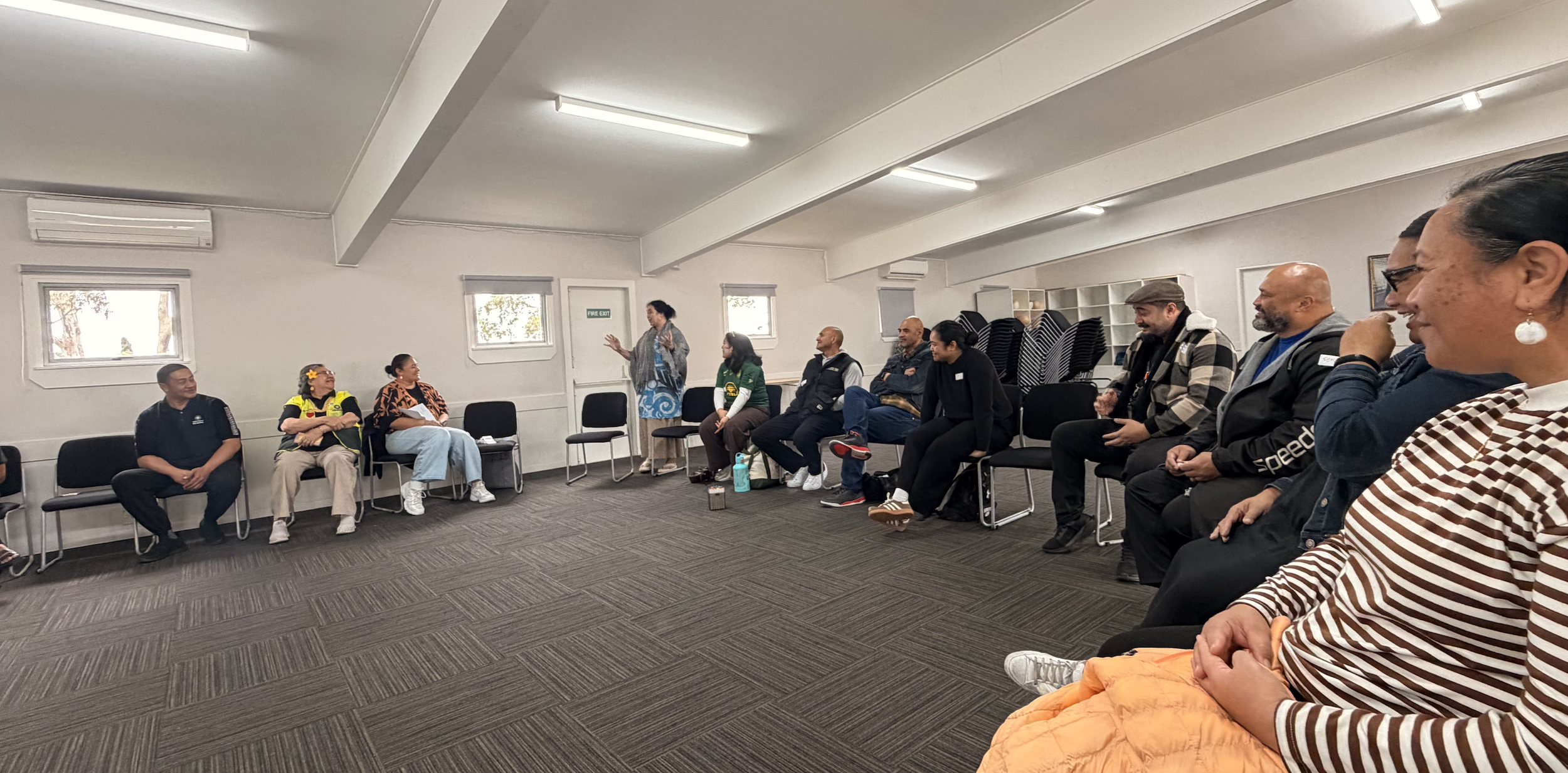
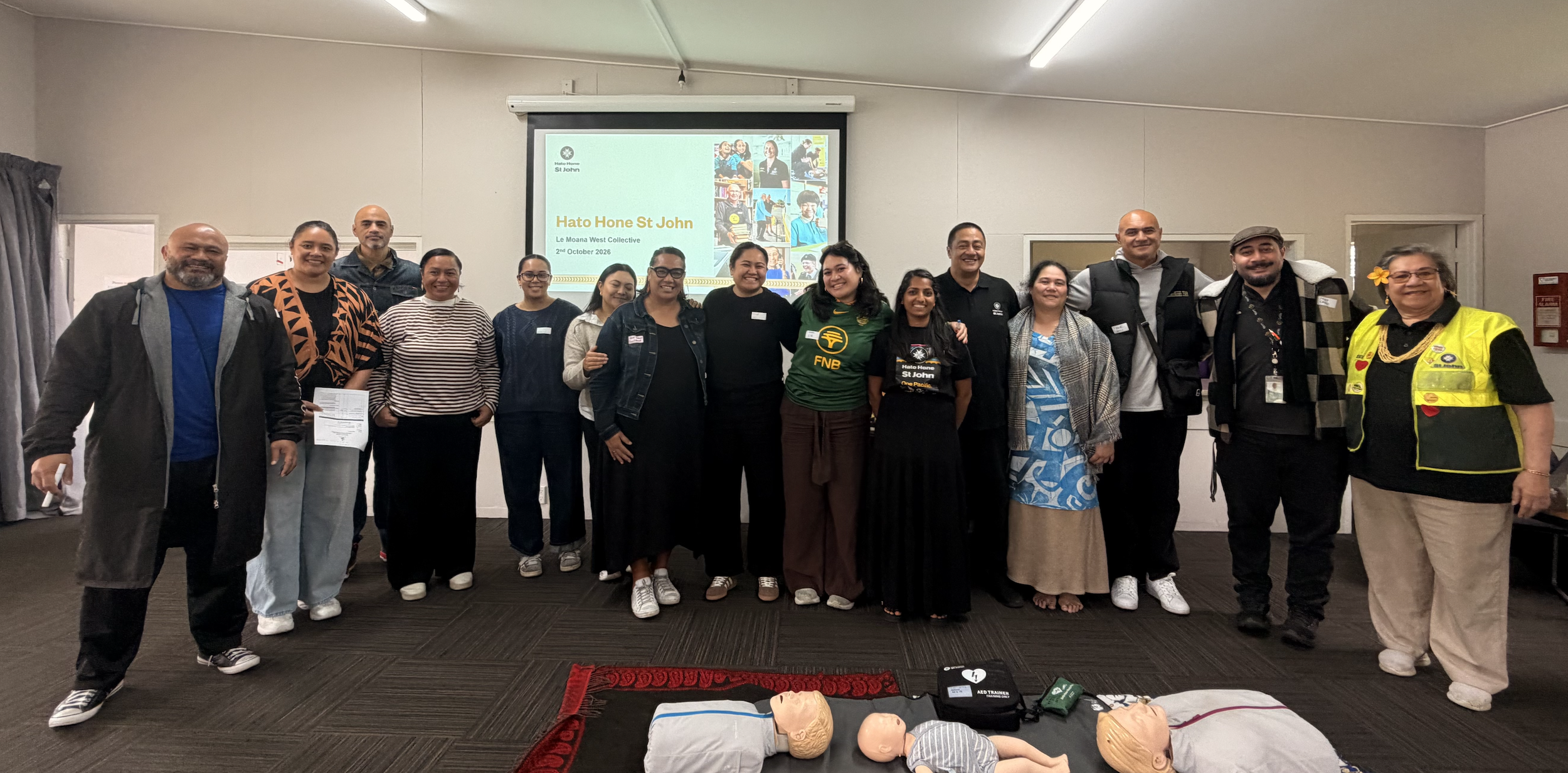
One of the strengths of Le Moana West Collective is the diversity of people, organisations and experiences brought together around a shared commitment to Pacific communities in West Auckland.
Our members work across different spaces, connect with different communities and bring different skills and knowledge to the table. Through these relationships, opportunities can reach further than any one organisation working alone.
Eleni's role within Hato Hone St John is a reflection of this.
By bringing her professional knowledge and connections into the Collective, she helped create an opportunity for members to develop skills that could directly benefit the people they work alongside.
Throughout the training, members were particularly interested in how they could take what they had learned back to their own communities, families and young people.
For many, the value was not simply in knowing how to perform CPR or use an AED themselves. It was in recognising how important it is for more Pacific people to have access to these skills, and how their own community relationships could help spread that knowledge.
This is what collective action can look like in practice.
One member shares an opportunity. Others bring their community connections, experiences and willingness to learn. Together, they create the potential for knowledge and resources to move across communities that might otherwise be harder to reach.
Community care is also about being prepared
Across our Pacific communities, care is often something we practise naturally.
It is found in the way we look after our elders, support our families, raise our young people and show up for one another when it matters.
When more of our people know how to recognise a cardiac arrest, call for help, perform CPR and use an AED, we are helping create communities that are better equipped to respond in moments of crisis.
It is especially important that our young people have opportunities to learn these skills too. Equipping the next generation with practical knowledge and confidence means they can play an active role in keeping their families and communities safe.
The 3 Steps for Life training was short, but the value of what our members learned has the potential to extend well beyond that session.
Each member left with knowledge they could use in an emergency and an interest in helping more people across their communities access the same training.
It is a reminder that strengthening communities does not always begin with a large programme or a new initiative. Sometimes, it begins with people coming together, sharing what they know and recognising what they can make possible for others.
Because a community that knows how to care for one another is powerful. And a community equipped to save one another's lives is even stronger.
3 Steps for Life is a free community training programme delivered by Hato Hone St John and proudly sponsored by MAS (Medical Assurance Society), helping make lifesaving CPR and AED training accessible to communities across Aotearoa.
