
Standing on Stories: Pacific Rangatahi Learning from Mana Whenua
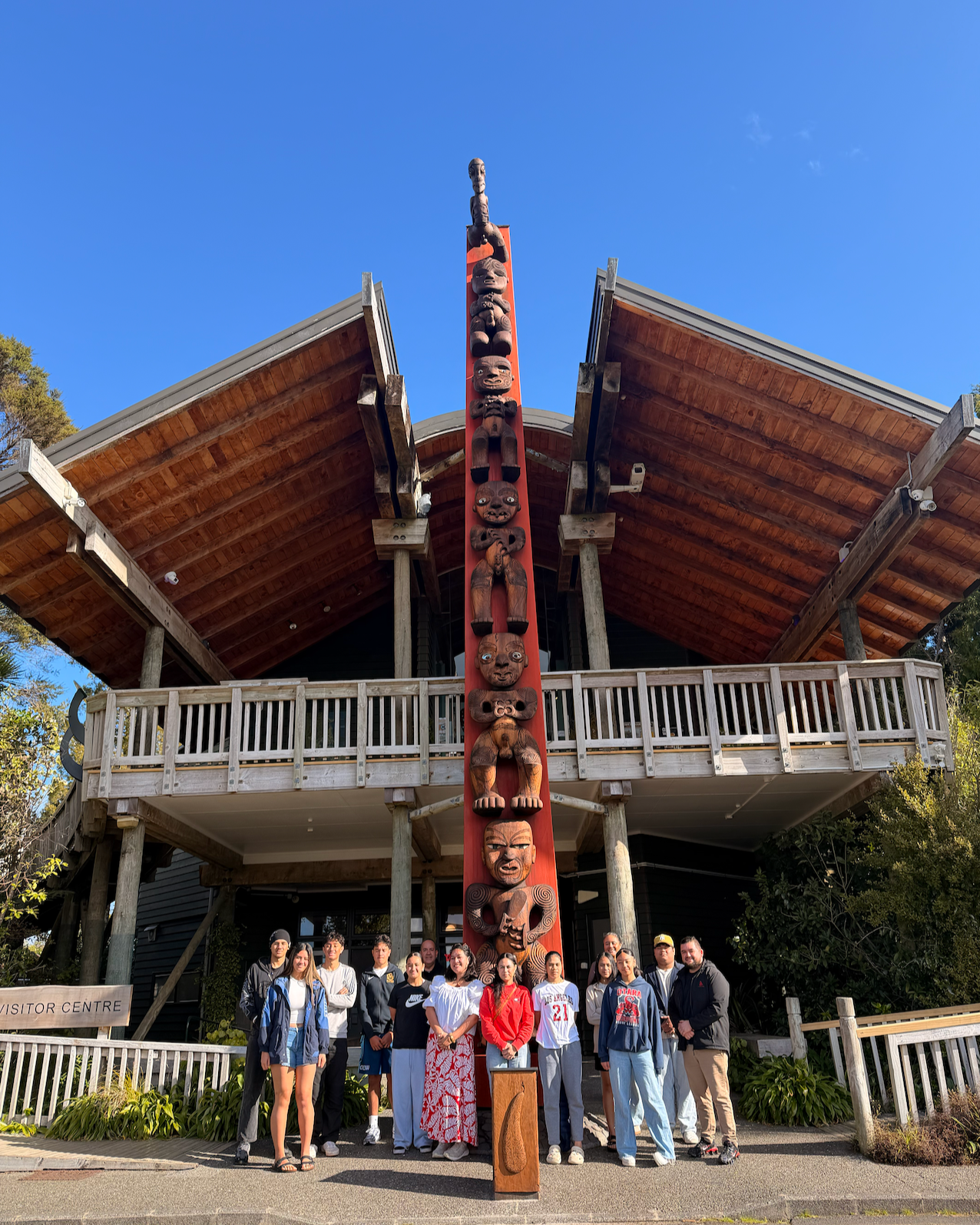
Le Moana West Collective Pacific rangatahi at Arataki Visitor Centre
For many of our Pasifika rangatahi, West Auckland is simply home.
It is where they were born or raised, where they go to school, where their families have built lives, and where their churches, sports teams, friends and communities are. They know the streets, the suburbs and the places that have shaped their everyday lives.
But how often do our young people get the opportunity to understand the whenua beneath those places - and hear its stories directly from the iwi who have held relationships and responsibilities to this land for generations?
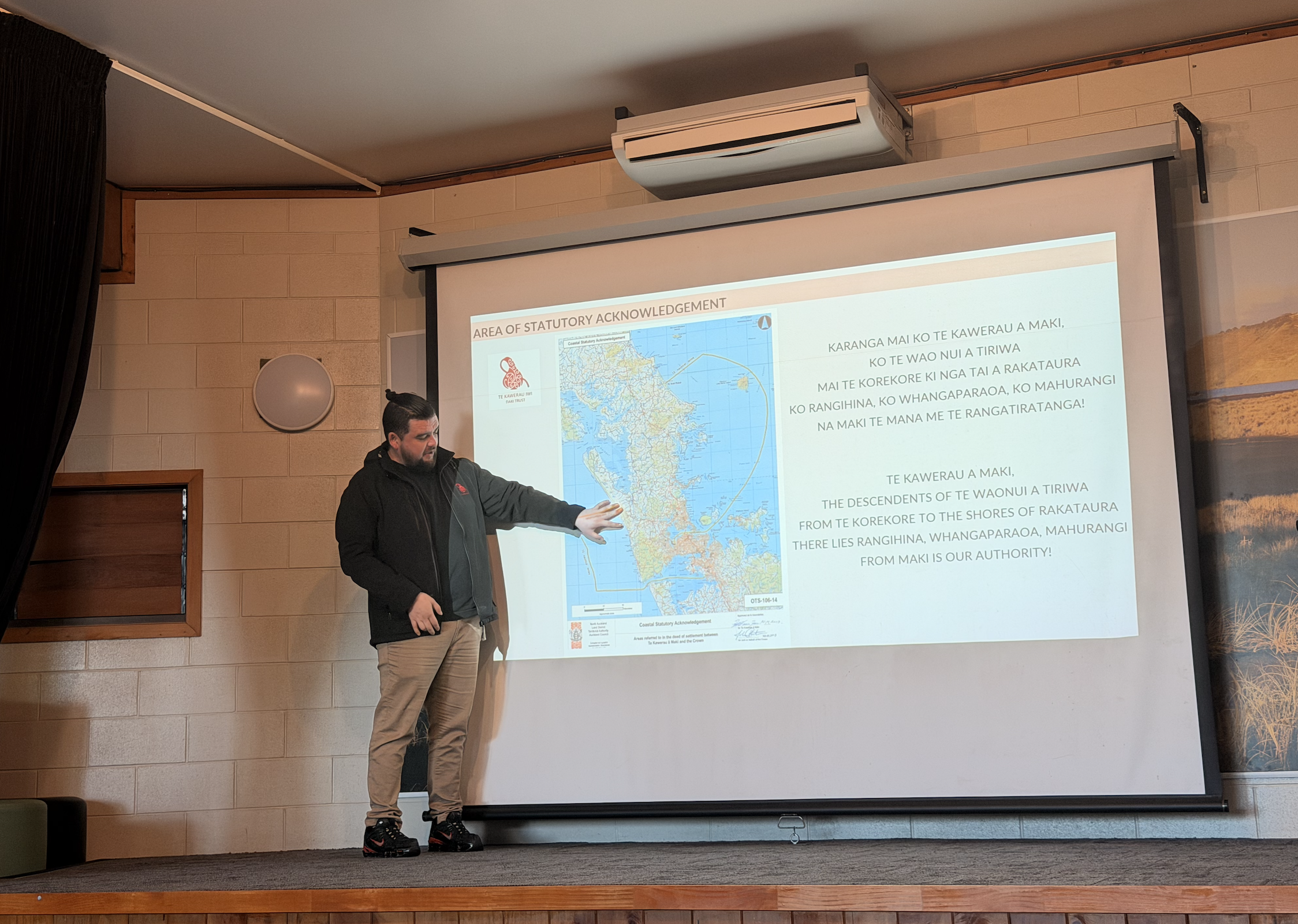
Recently, rangatahi from across Le Moana West Collective gathered at Arataki Visitor Centre for a cultural induction with Te Kawerau ā Maki, mana whenua of West Auckland.
It was an opportunity for our Pacific young people to ground themselves in the place they call home — and to understand that our connection to Aotearoa also comes with a responsibility to know, respect and build relationship with tangata whenua.
Te Kawerau ā Maki are a West Auckland-based iwi and the northernmost iwi of the Tainui waka, with whakapapa connecting their people to these lands and waterways across generations.
Surrounded by Te Wao Nui a Tiriwa - the original name for the Waitākere Ranges - our rangatahi heard about the whakapapa, histories and responsibilities that continue to shape West Auckland today.
What made this experience particularly special was watching familiar places begin to take on new meaning.
Names our rangatahi have grown up hearing suddenly became stories.
They learnt that Te Kōpua, the original name for Henderson, means the deep pool, describing a place where water gathers and settles.
They heard about Hui Kōrero, in Avondale, where streams converge - a meeting place shaped by both geography and dialogue.
Onewherowhero, in Kelston, speaks to the red clay soil of the area, while Okaurirahi, Glen Eden, remembers the giant kauri that once stood there.
For rangatahi who have spent much of their lives moving through these places, learning their names and meanings offered another way of seeing home. The suburbs were no longer only the places they knew through roads, shops, schools and houses. They were part of a much older story.
For Pacific young people growing up in Aotearoa, conversations about identity can often begin with looking back across the Moana.
We ask: Where are our families from? What village do we belong to? What language do we speak? What did our ancestors teach us?
But for our diasporic Pacific rangatahi, there is another part of their story too: understanding where their feet stand now.
Many of our young people will spend their lives in Aotearoa. They will become community leaders, professionals, parents, creatives, decision-makers and advocates here. If we want the next generation of Pacific leadership to contribute well to this country, they need opportunities to understand the foundations of the whenua on which they are building that future.
That means knowing whose whenua they stand on and it means understanding the history that existed long before our families arrived.
And it means recognising tangata whenua not simply as another community we work alongside, but through their unique place as tangata whenua and Te Tiriti partners.
For Le Moana West Collective, strengthening Māori–Pacific relationships cannot only happen at an organisational or leadership level.
“Becoming better Te Tiriti partners starts with relationship”
As rangatahi move into leadership roles within their own communities, they carry with them a greater understanding of Te Kawerau ā Maki, the whenua of West Auckland, and what respectful partnership can look like.
When a young person learns the history of the place they call home, it can change how they speak about it, how they care for it, how they lead within it and how they engage with tangata whenua.
Over time, we hope that creates a generation of Pacific leaders for whom Te Tiriti partnership is not something added onto their work later - it is part of the foundation they lead from.
Knowing where we come from - and knowing where we stand
Our young people should be proud and grounded in their own Pacific whakapapa, cultures, languages and ancestral homelands.
At the same time, those growing up in Aotearoa should have opportunities to understand the whakapapa of the whenua that has also become home.
For Le Moana West Collective, this induction was another step towards the kind of future we want to see across West Auckland: Pacific communities that are strong in our own identities, grounded in the place we call home, and committed to walking alongside mana whenua with understanding, respect and reciprocity.
Because being at home somewhere is about more than living there.
It is also about knowing its stories, respecting those who came before us, and understanding our responsibility to the generations who will come after.
