Building the Next Generation of Pacific Climate Wayfinders
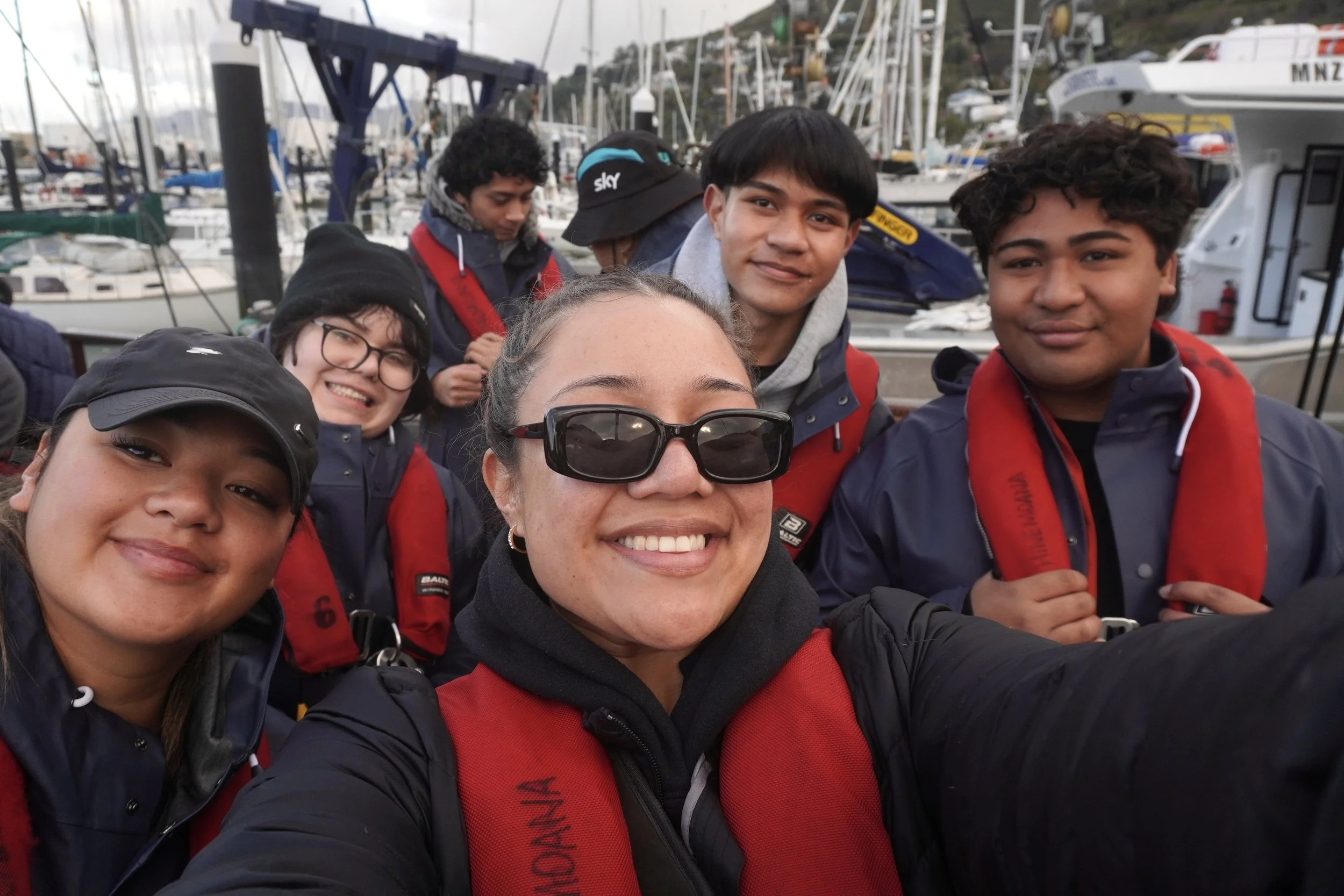
For generations, Pacific people have looked to the ocean, stars, winds and waves to find our way. Our ancestors crossed the largest ocean in the world through preparation, observation, collective knowledge and an incredible ability to adapt to the environment around them.
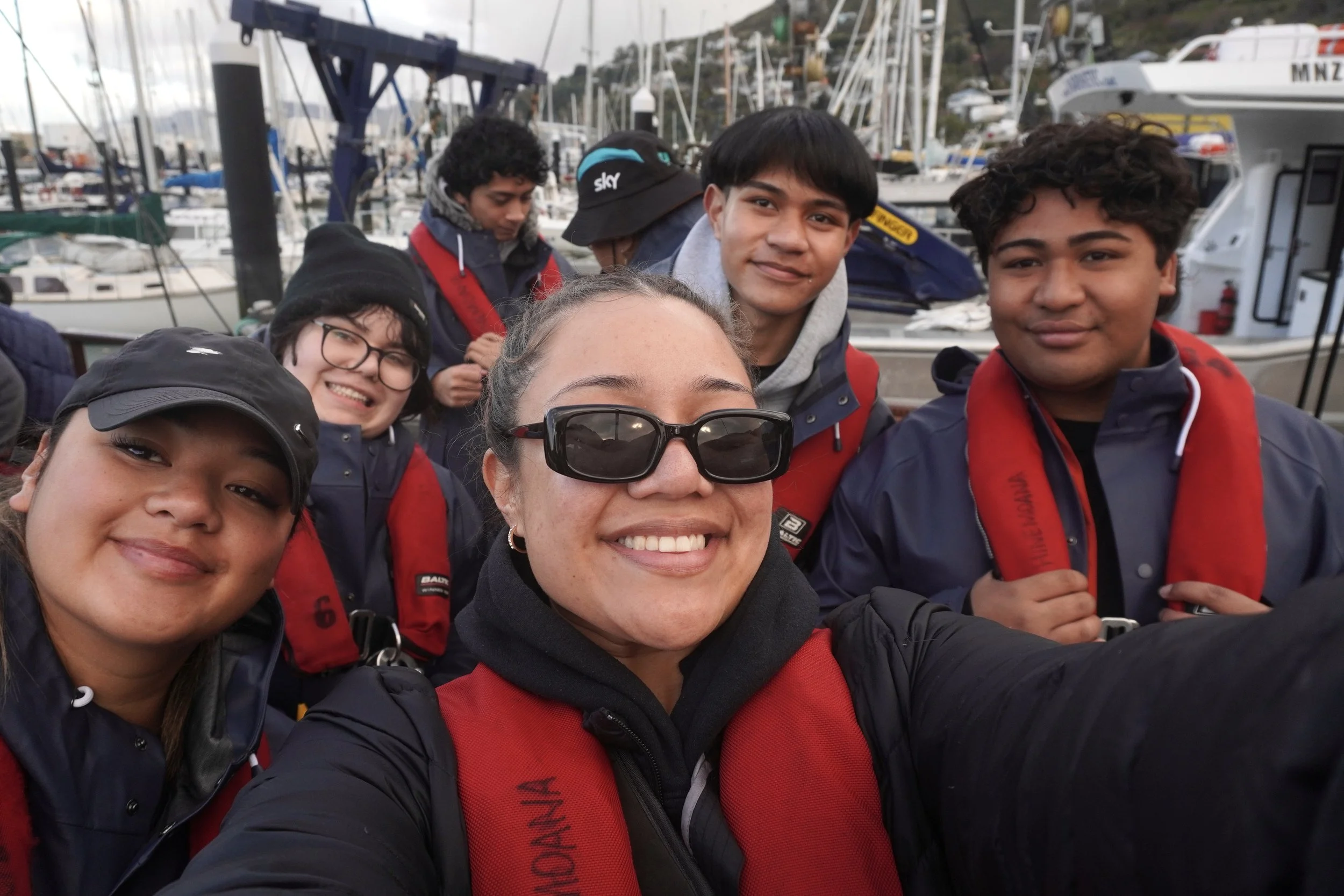
Through Le Moana West Collective’s Sāuni initiative, 12 young Pacific leaders from across various climate resilience projects travelled to Ōtautahi to experience these lessons first-hand - voyaging aboard Hinemoana and learning how the knowledge of our ancestors can help prepare our communities for the challenges we face today.
Each returned home connected to communities and projects of their own, carrying new knowledge, confidence and practical tools they can now share with others. Rather than climate preparedness being something delivered to Pacific communities, Sāuni is helping build the capability of young Pacific people to lead these conversations themselves - drawing from ancestral knowledge while responding to the climate realities our communities face today.
When we equip one young person to become a wayfinder, that knowledge has the potential to travel through an entire community.
This is the story of 12 emerging wayfinders, five days in Ōtautahi, and what happens when we look to the knowledge of our past to prepare our communities for the future.
Sāuni — getting our communities ready
Sāuni means “to get ready.”
The initiative creates collective space for Pacific communities to explore climate preparedness, readiness and resilience in ways that make sense for our people, while supporting communities to lead their own responses to the challenges ahead.
As part of this kaupapa, young people and leaders from TASIANI, Manava Nui – Pacific Vision Aotearoa and Tapasā – Navigating Futures joined together and travelled to Ōtautahi for five days of voyaging and wayfinding facilitation training with Faumuina Felolini Maria Tafuna'i and the Flying Geese Trust.
For 12 young people involved across our Sāuni climate resilience projects, this was an opportunity to step onto a waka and learn the way our ancestors did.
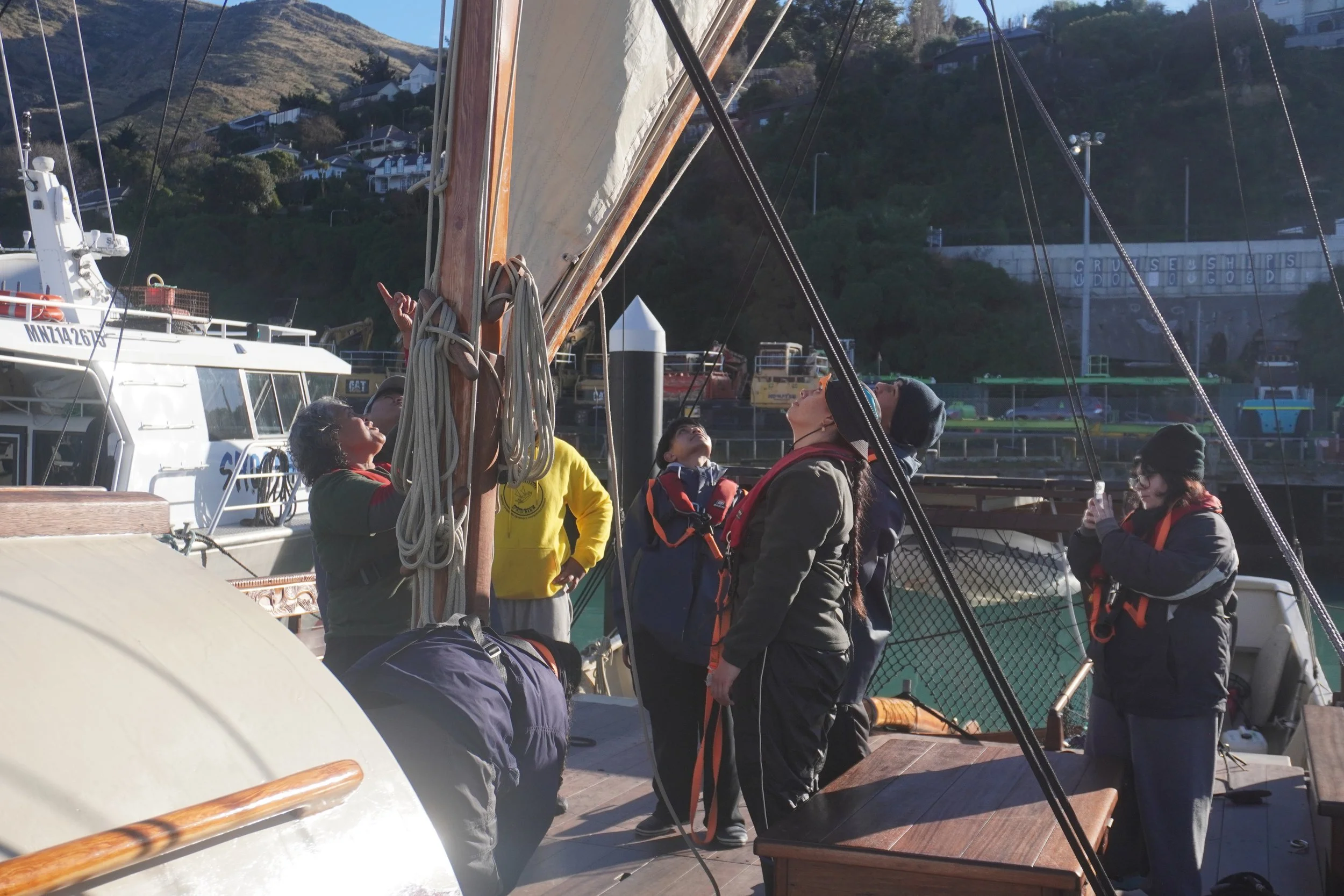
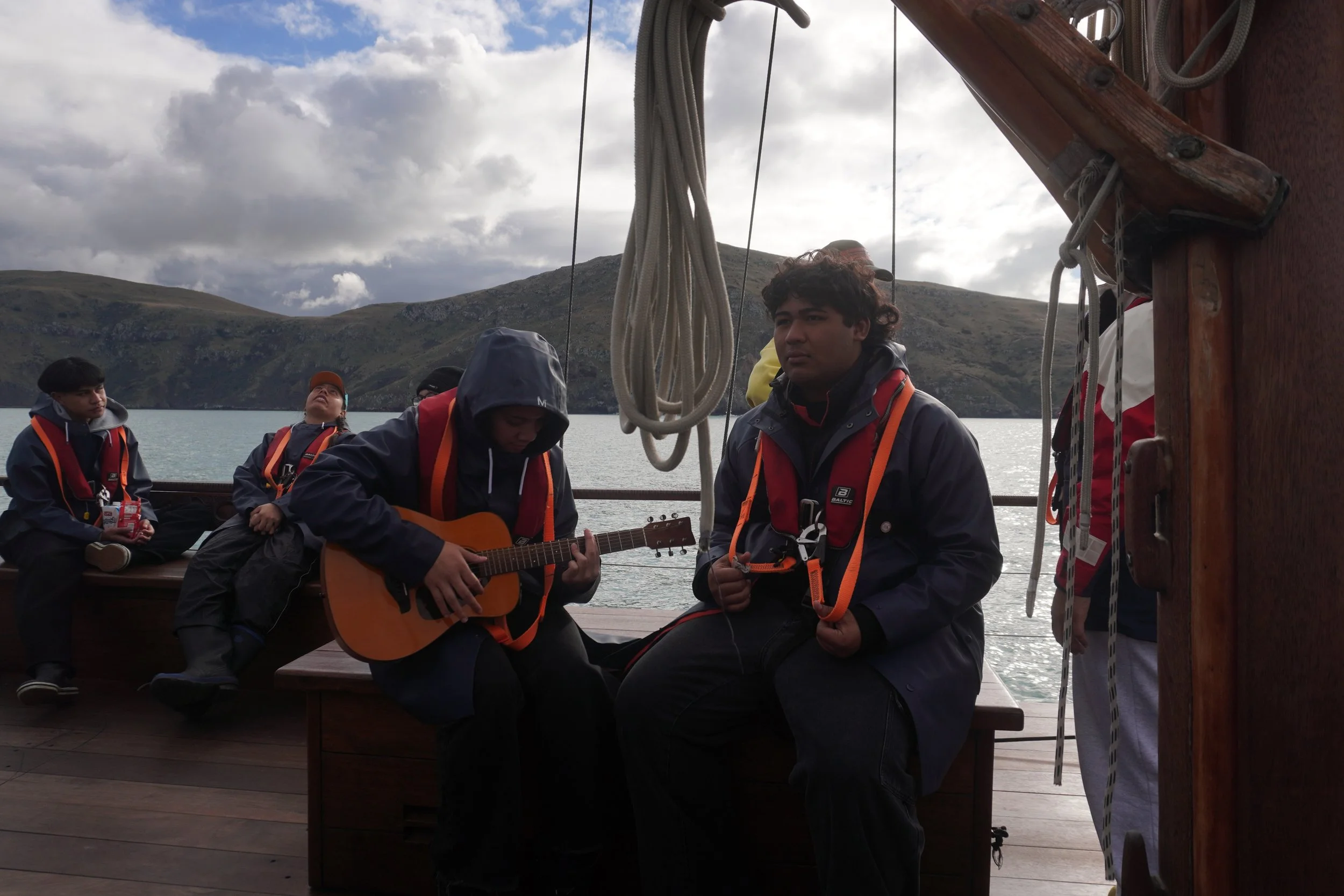
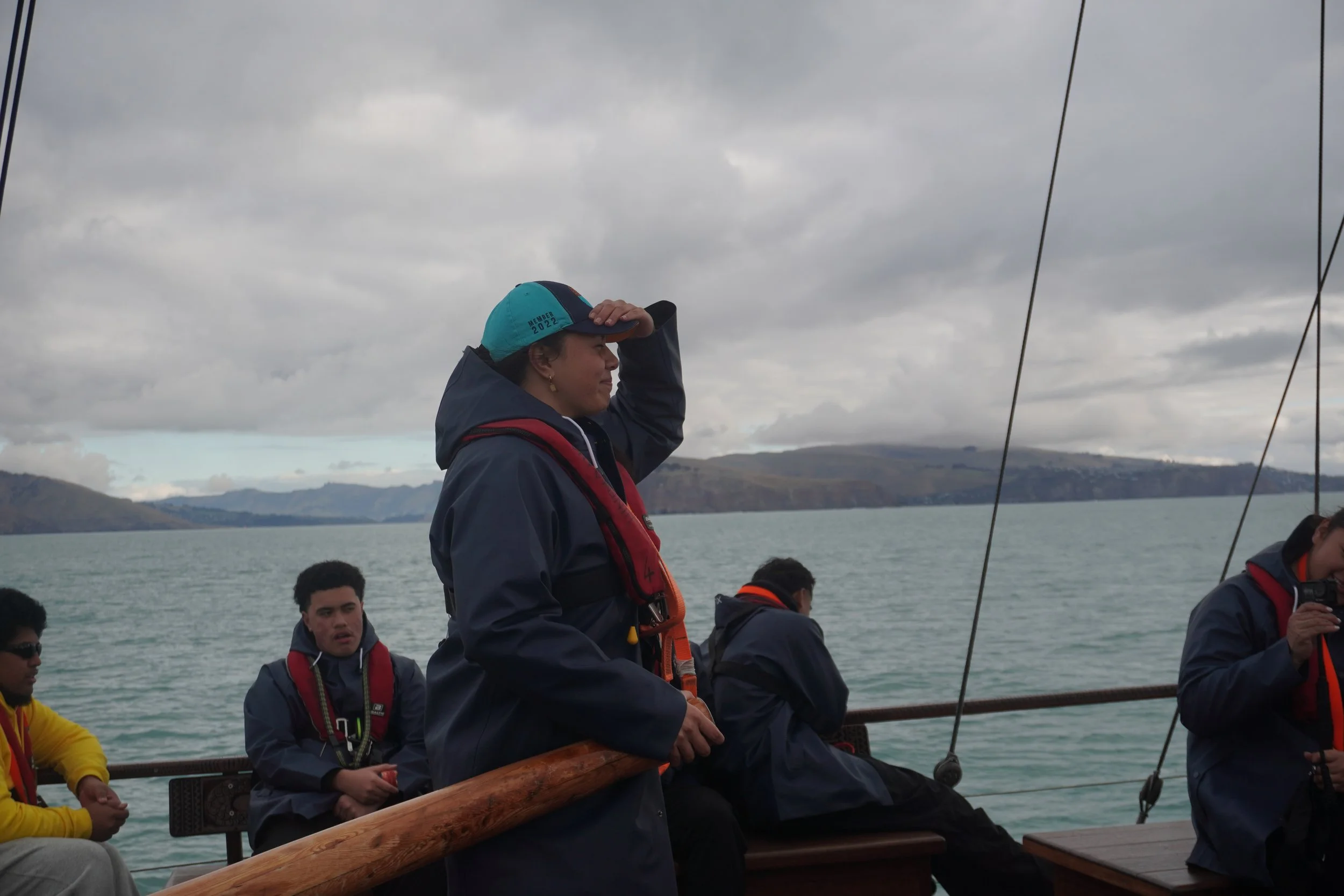
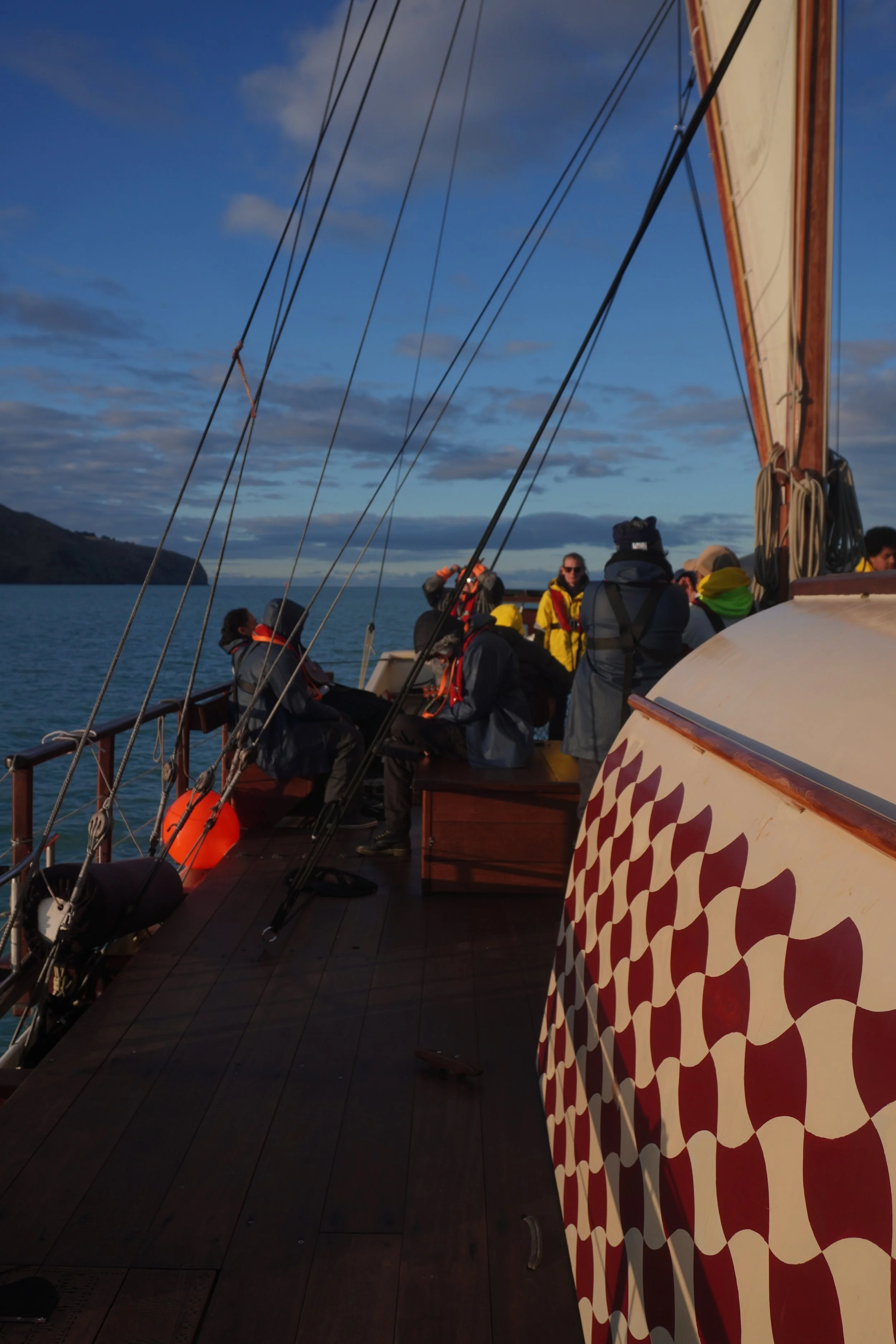
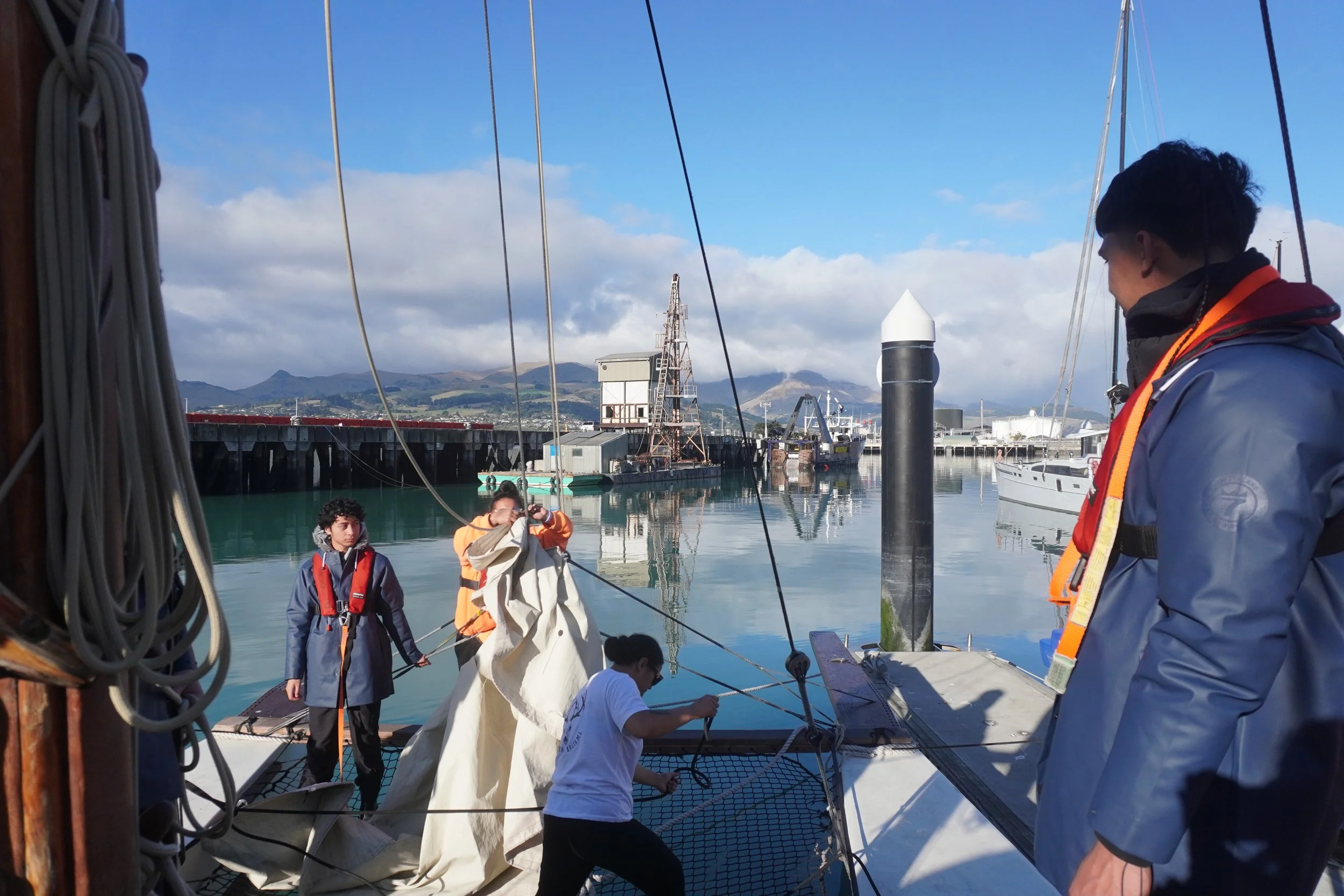
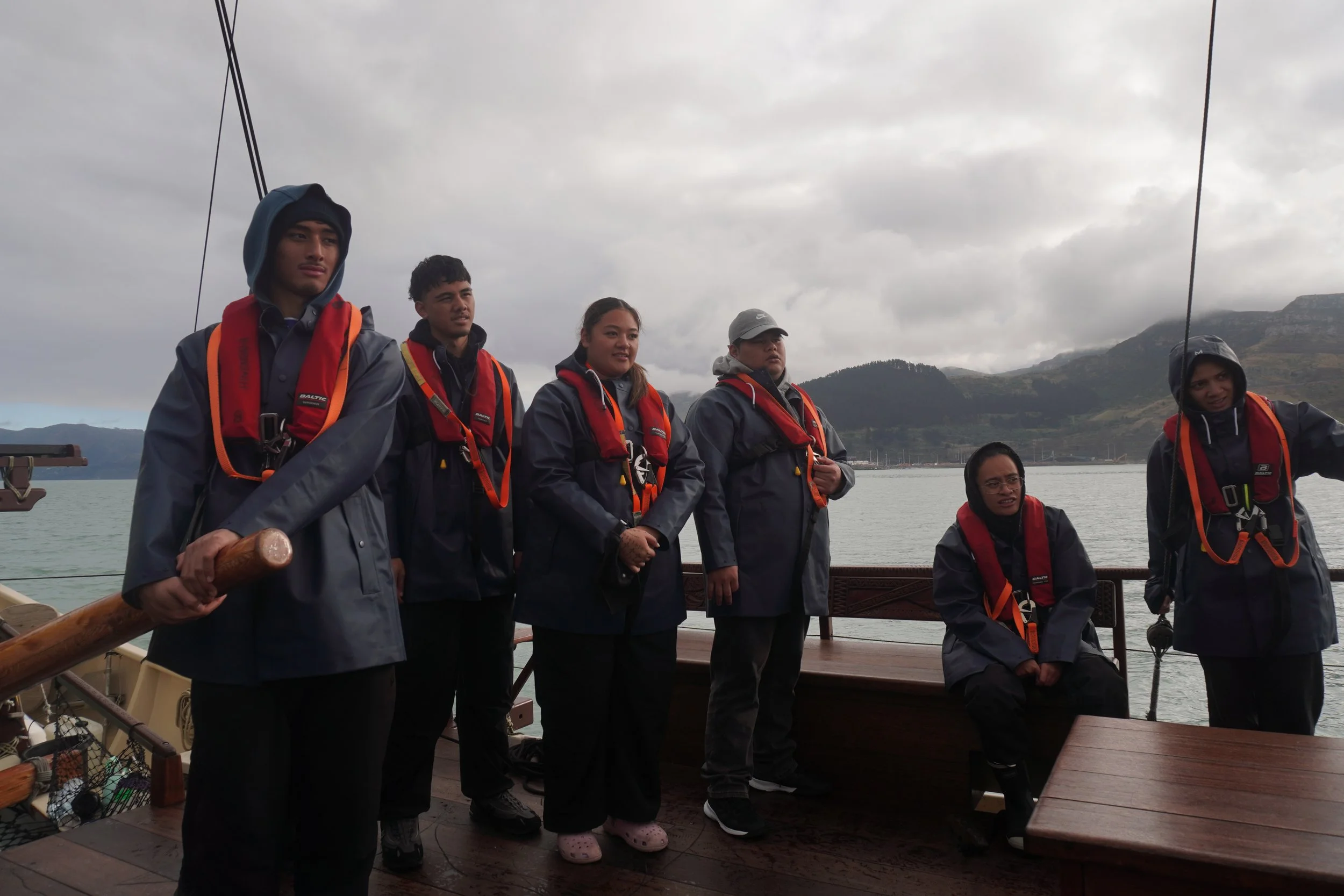
The experience began with a two-day voyage aboard Hinemoana, a traditional double-hulled waka hourua operated by Te Toki Voyaging Trust. For many of our young people, it was their first time voyaging.
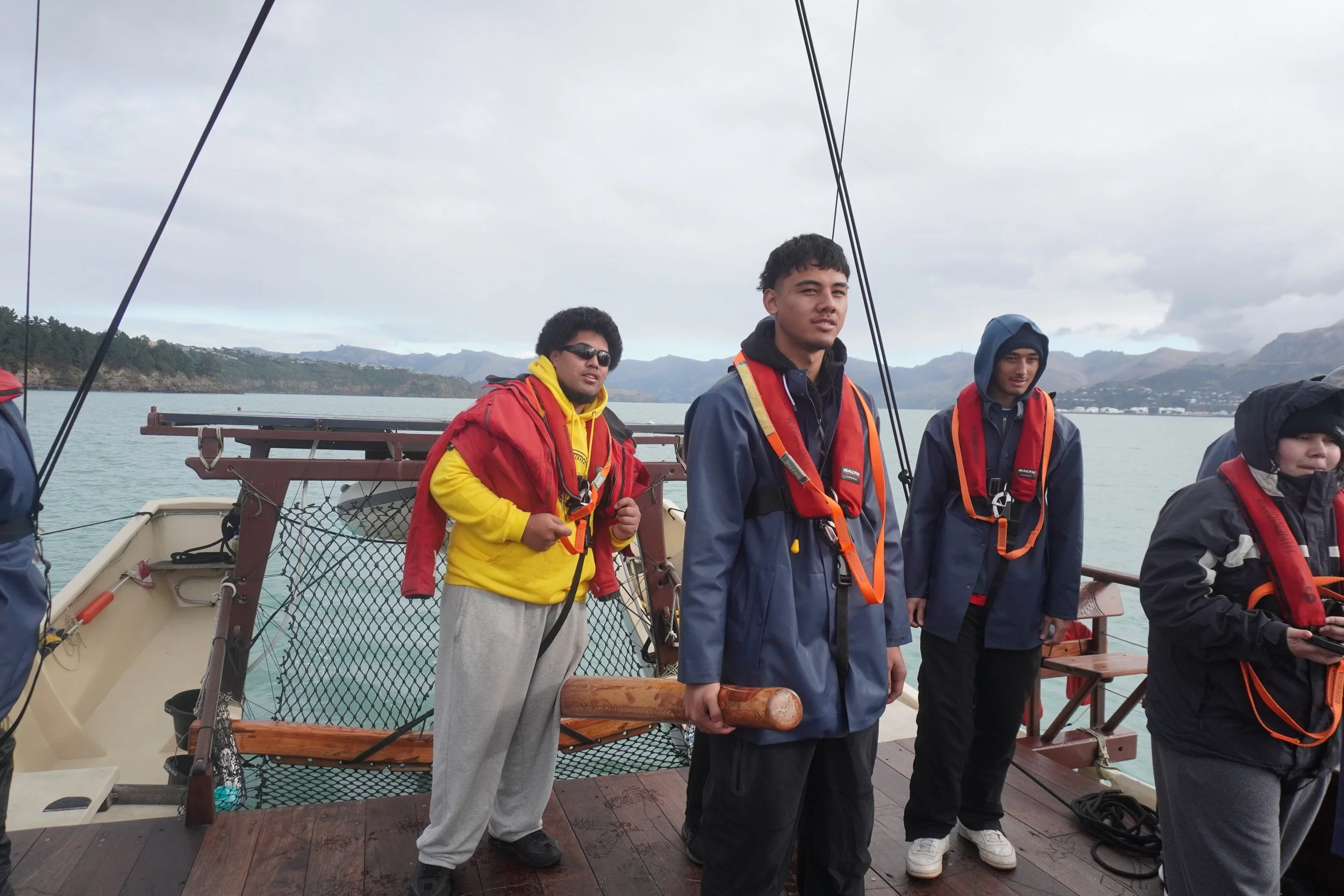
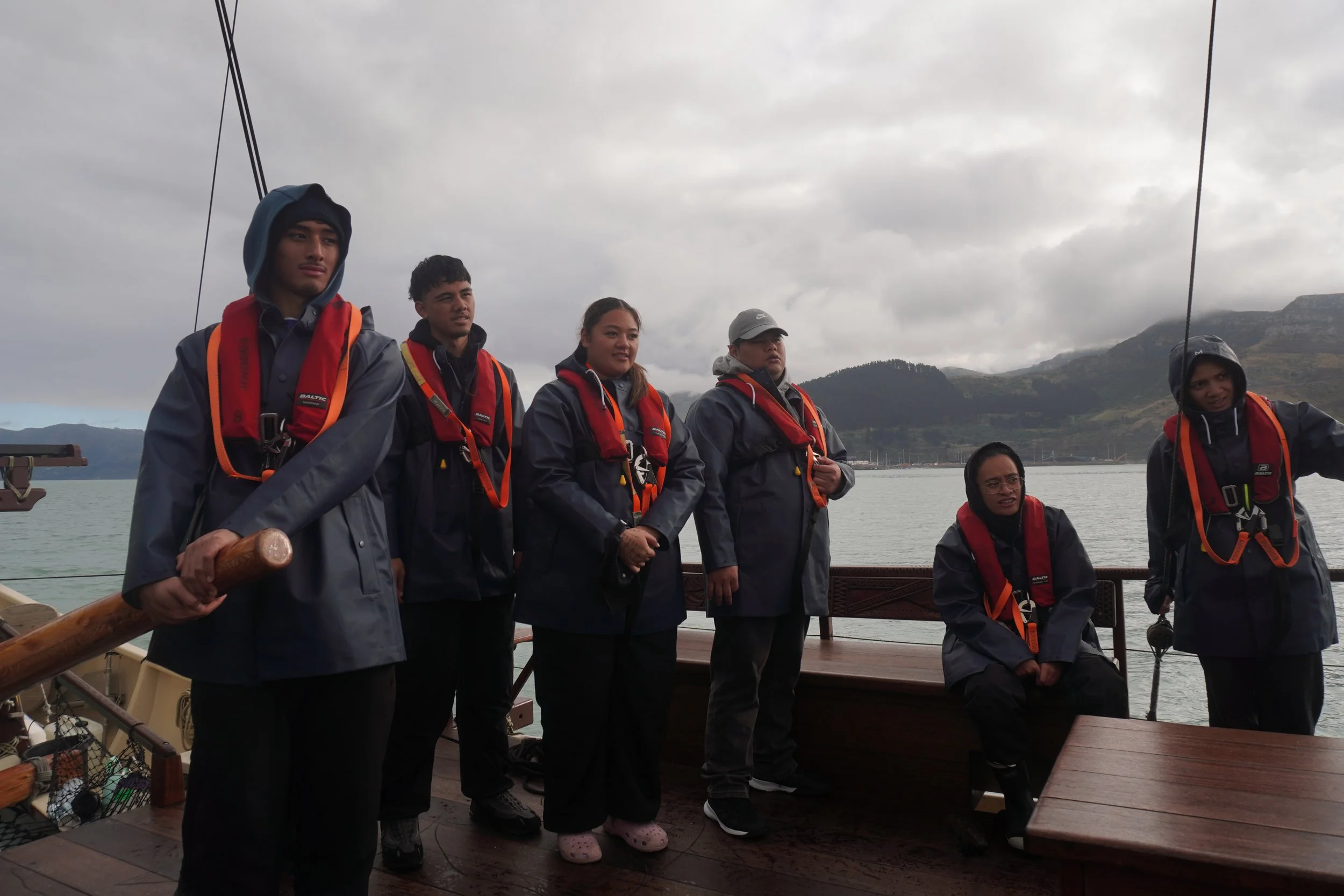
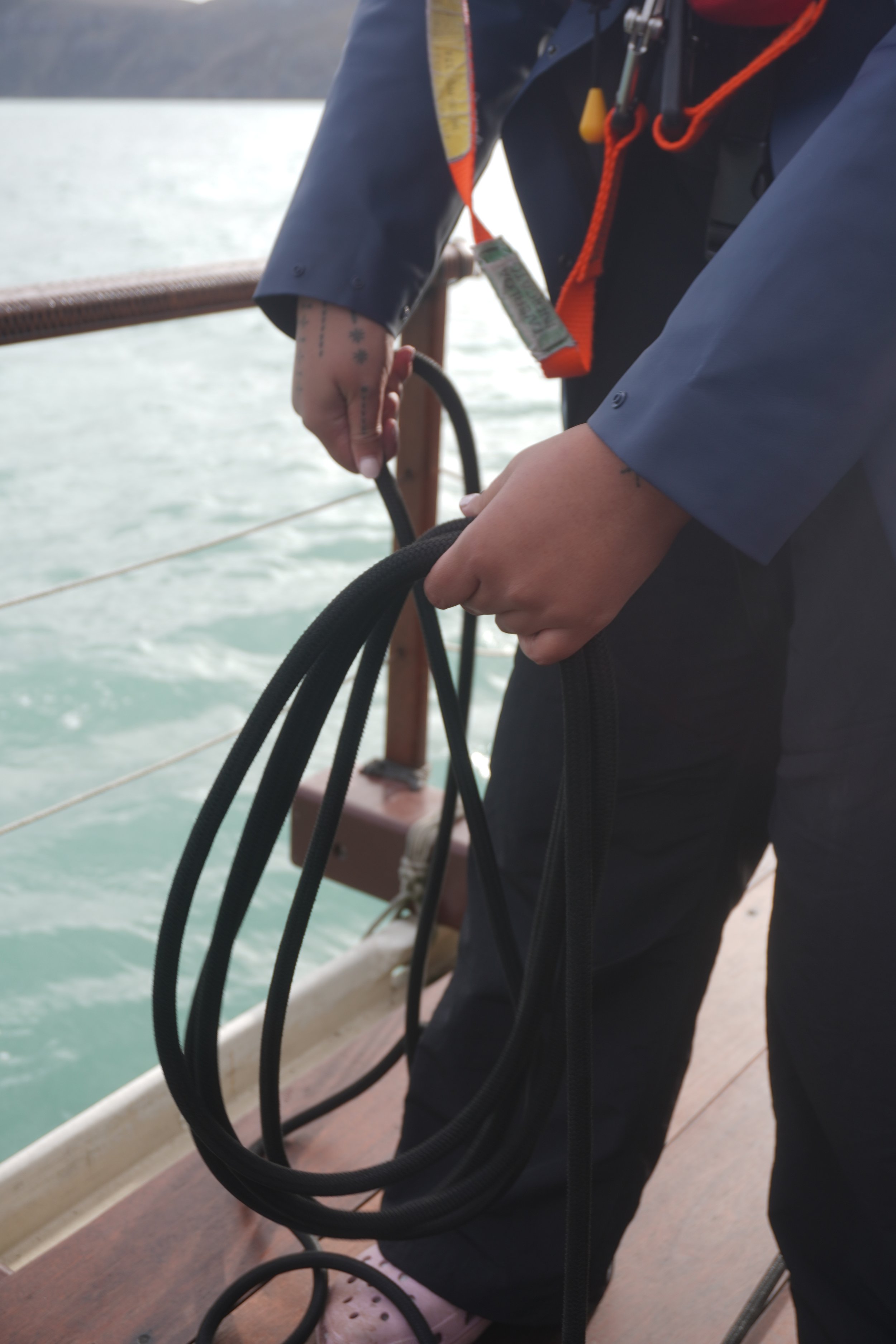
They learned how to work the lines, steer the waka using the hoe, tie knots, tack, read the changing environment and understand the different roles required to keep a waka moving. They also spent the night aboard Hinemoana, taking turns on watch throughout the night.
Out on the ocean, ideas like preparedness and resilience suddenly became real.
You have to pay attention to what is changing around you. You have to know your role. You have to communicate. You have to adapt when conditions change. Most importantly, you have to look after the people on the waka with you.
These are the same principles our communities need when thinking about climate resilience.
Grace (23) reflected:
“Being on Hinemoana taught me so much about climate resilience, especially how our ancestors used to prepare for their voyage and all the different things they had to navigate and adjust to.”
For her, the experience reinforced that preparedness is not only individual.
“Climate resilience shows that it takes a village. We need people on the land and people to help us go in a direction to face natural disasters and climate events.”
From voyagers to facilitators
After returning to land, the next part of the journey began.
Faumuina and her team took the group through the Habits of a Wayfinder Facilitator, weaving the principles of traditional voyaging throughout the training.
Instead of learning facilitation from a classroom alone, rangatahi were able to connect it to what they had just experienced at sea.
They mapped who needed to be on their “waka”, imagined their “island of success”, developed their values compass and explored how they could navigate challenges along the journey.
They also deepened their understanding of traditional star knowledge and explored ways these teachings could be shared within their own communities.
It was creative, practical and grounded in Pacific ways of knowing.
Reviving knowledge while preparing for the future
For many of the rangatahi, there was also something powerful about realising that the skills they were learning were not new.
They were inherited.
Keneti, 17, shared:
“It was amazing. I was honoured to be a part of reviving this art. Voyaging has been part of our Pasifika culture for thousands of years, so being able to learn and bring these insights back to our communities has been so great.”
Uelese, 16, reflected:
“It allowed me to discover more about myself and pushed me out of my comfort zone. This will be an experience I remember for life. I’m super grateful and can’t wait to practise being a wayfinder facilitator.”
For Mahonri, 19, being on the ocean created a new connection to those who came before him:
“The ocean is so beautiful and being on the waka makes you think about your ancestors and how they used to do it for thousands of years. I’m grateful for this programme for restoring it and keeping it alive.”
Jesse, 17, spoke about how supported he felt entering an environment that was completely new to him, while Gavin reflected on the confidence he gained from pushing himself beyond his comfort zone.
Across each reflection was a common thread: connection, courage and a desire to take what they had learned back home.
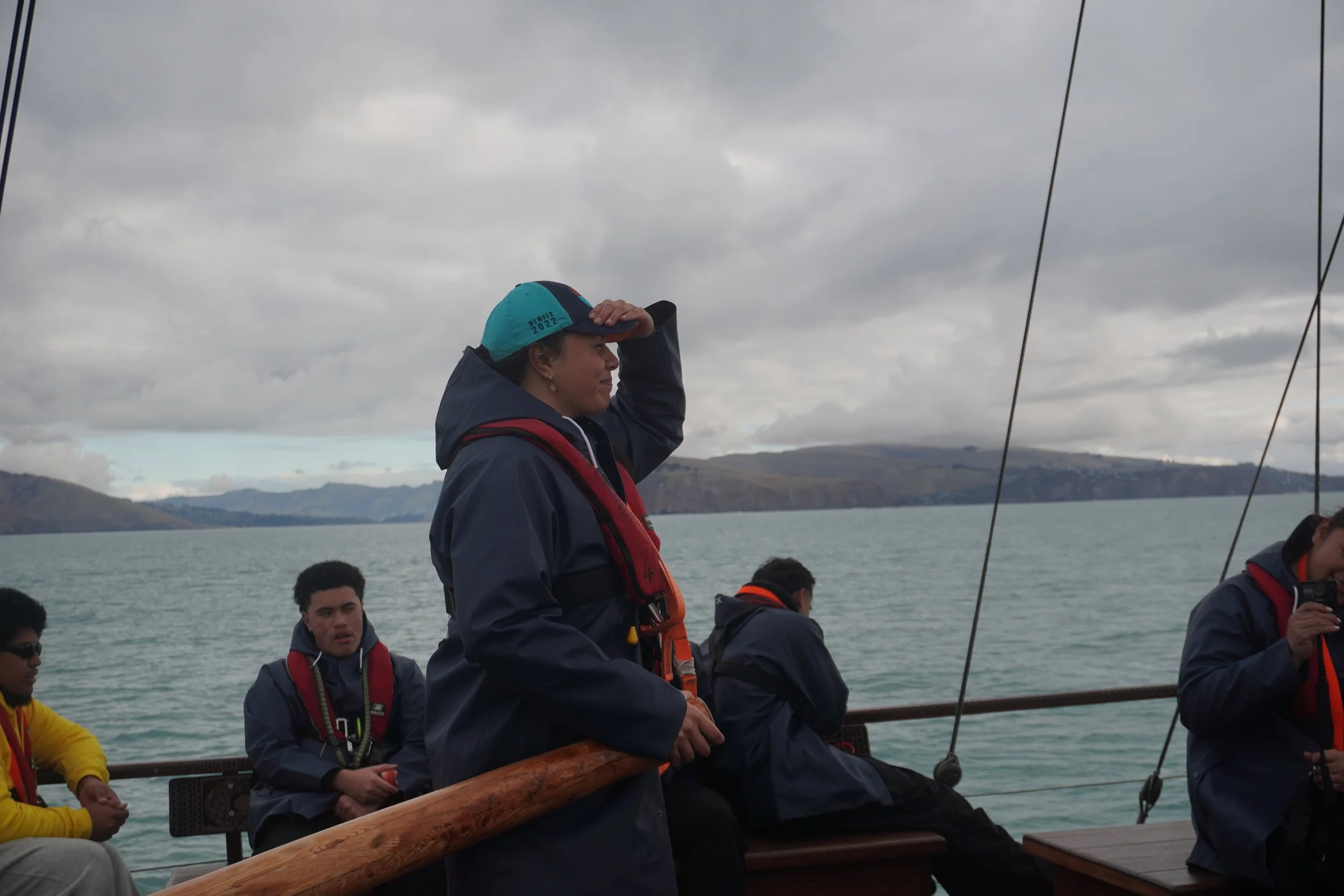
Our ancestors were wayfinders. Our young people are too.
Climate change presents new challenges, but our communities do not enter this future empty-handed.
Pacific cultures hold generations of knowledge about observing our environments, preparing collectively, adapting to change and navigating uncertainty.
Sāuni is about creating opportunities for that knowledge to meet the realities our communities face today.
Our young people went to Ōtautahi as participants and they returned as voyagers, facilitators and emerging climate resilience leaders - ready to help navigate their communities towards their own islands of success.
Because preparing for the future is about strengthening the people, relationships, knowledge and leadership that will help our communities find their way, whatever conditions lie ahead.
One experience can therefore travel much further than the 12 people who were physically on the waka.
It can reach their families, youth groups, community organisations and future projects. As those young people become more confident facilitators and leaders, they can help make climate preparedness something our communities understand, practise and take ownership of.
That is what systems change can look like at a community level: investing deeply in people, reconnecting them with knowledge that already exists within our cultures, and giving them the tools to carry that knowledge forward.
The Sāuni initiative is supported by Auckland Emergency Management and Health New Zealand.